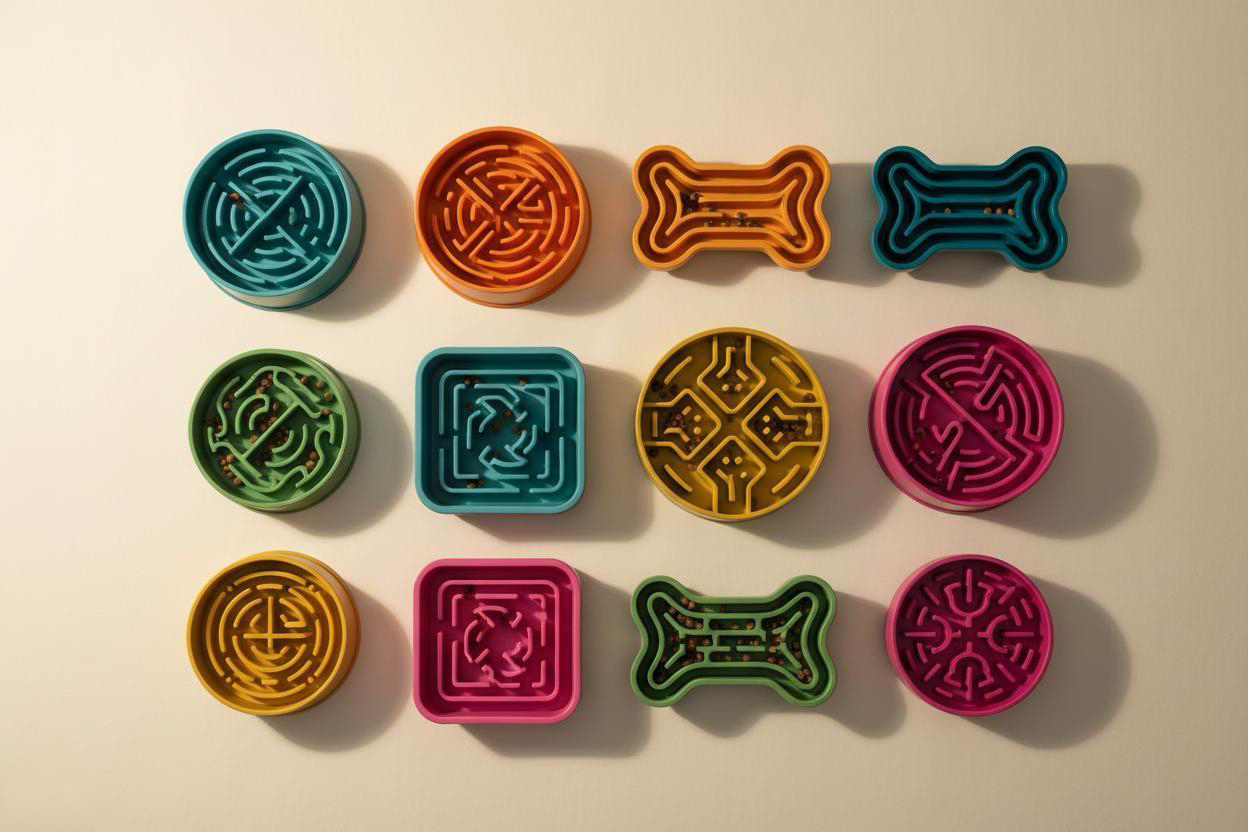
If your dog inhales dinner in under a minute, a slow feeder bowl is one of the simplest changes you can make at home. But not every maze-patterned dish is safe, effective, or easy to clean. After comparing dozens of models against veterinary research, owner feedback, and hands-on criteria, our top overall pick for most households is the Outward Hound Fun Feeder Slo Bowl — it slows eating without frustrating dogs, comes in sizes from small to large, and is top-rack dishwasher safe. For owners who want a heavier, non-plastic option, the LE TAUCI Ceramic Slow Feeder Bowl is our ceramic favorite, while the Outward Hound Fun Feeder Stainless Steel Slo Bowl is the best choice for hygiene and durability.
Why Trust The Caring Pet
Our recommendations start with peer-reviewed research, not marketing copy. We ground our testing criteria in a 2016 study published in Veterinary Evidence, which found that slow feeder bowls significantly extend eating time in dogs, and in bowl-material research from Hartpury University cited by Today’s Veterinary Nurse. We then cross-check those findings against current retailer listings, long-term owner reviews, and manufacturer specifications. This article contains affiliate links, which means we may earn a small commission if you purchase through them — at no extra cost to you. Our picks are chosen independently, and we do not accept paid placement.
How We Chose the Best Slow Feeder Dog Bowls
We scored every bowl on six criteria, each tied to either published research or real-world durability data:
- Safety and materials. A Hartpury University study found that plastic bowls harbor the most bacteria, while ceramic bowls can host a wide diversity of pathogens, including E. coli, Salmonella, and MRSA. We therefore favor food-safe, BPA-free plastics with smooth edges, heavier ceramics with lead-free glaze, and stainless-steel designs where available. We also check for stability features that prevent tipping.
- Slowing effectiveness. The Veterinary Evidence study by Buckley and Lees showed that dogs eating from a “go slow” feeder took significantly longer to finish a meal (P = 0.006) than when using a standard bowl. We look for maze patterns that create friction without making the meal impossible.
- Ease of cleaning. Bacteria grow in scratches and crevices. We prioritize bowls that are dishwasher safe or have wide enough channels to scrub by hand.
- Size and breed fit. A bowl must hold at least one full meal portion for the dog’s size. We note which models offer multiple capacities.
- Durability and stability. A slow feeder only works if it stays put. We favor heavier bases, non-slip pads, and materials that resist cracking or chewing damage.
- Value. Price is judged against expected lifespan and included features, not in isolation.
A product had to score at least 4 out of 5 on safety and 3.5 overall to make our shortlist.
Top 4 Slow Feeder Dog Bowls of 2026
 Top Pick
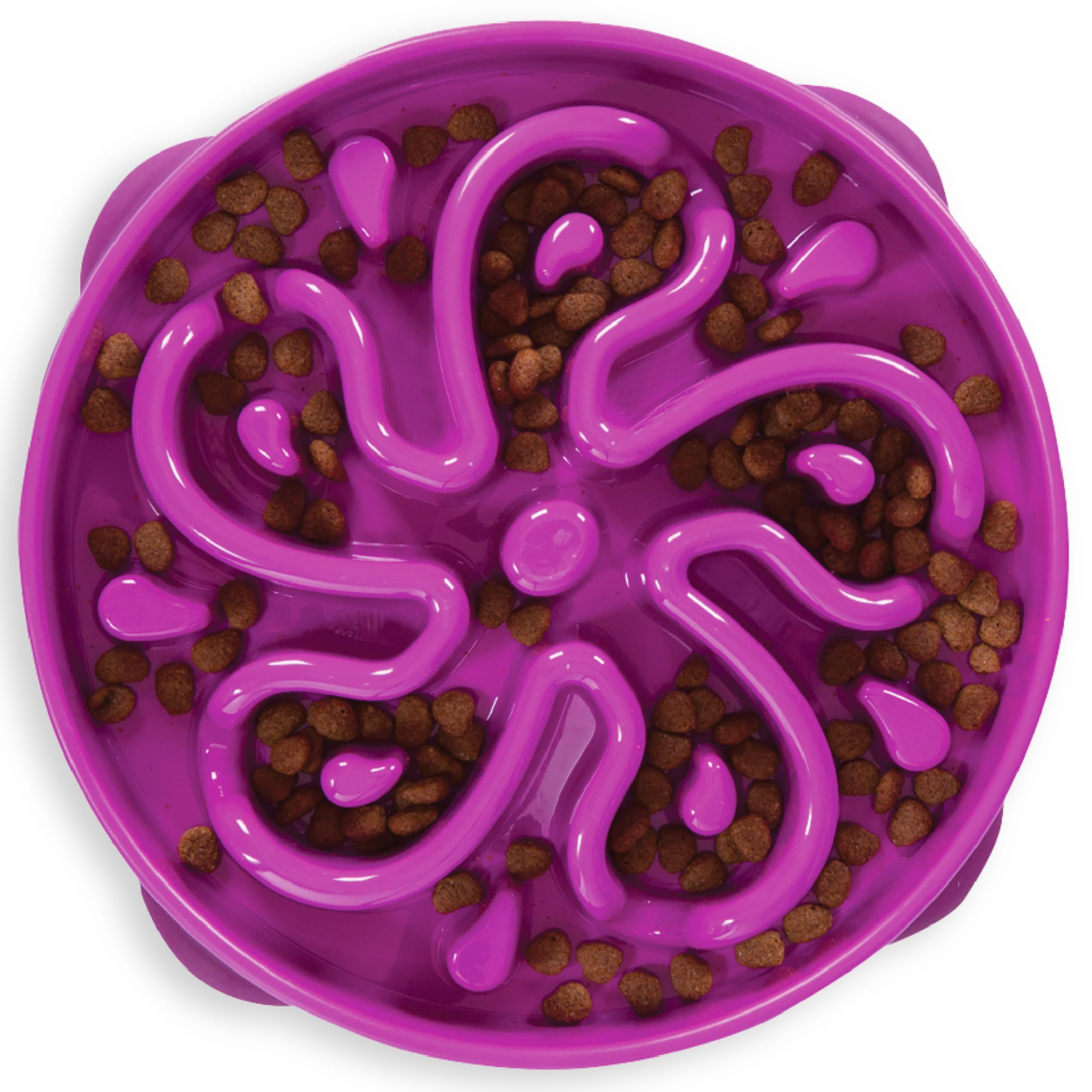
Outward Hound Fun Feeder Slo Bowl
Best For: Most dogs, especially fast eaters under 70 lb
Material: BPA-free plastic
Capacity: Up to 4 cups in large size
What We Like
- Maze pattern slows eating
- Non-slip base
- Top-rack dishwasher safe
- Multiple sizes and colors
What We Don't Like
- Small sizes can be flipped by determined dogs
- Not ideal for flat-faced breeds
The Outward Hound Fun Feeder Slo Bowl is the benchmark most other slow feeders are measured against. Its raised ridges and valleys force dogs to eat around obstacles, turning a 30-second gulp into a 5-to-10-minute meal. That aligns with what Buckley and Lees observed: even after dogs gained experience with a slow feeder, they still ate more slowly than from a standard bowl.
We recommend the Slo Bowl for most households because it balances effectiveness with simplicity. The BPA-free plastic is lightweight but thick enough to resist chewing, and the rubberized base keeps the bowl from sliding across the floor. It comes in several sizes, including a small version for dogs under 20 pounds and a large version that holds up to four cups of kibble. For owners of deep-chested breeds concerned about bloat, slowing mealtime is a practical first step, and this bowl is the easiest tool to start with.
The main caveat is that the smallest sizes can be flipped by larger or highly motivated dogs. If your dog is a “bowl flipper,” choose the large size or consider the ceramic option below.
 Best Budget
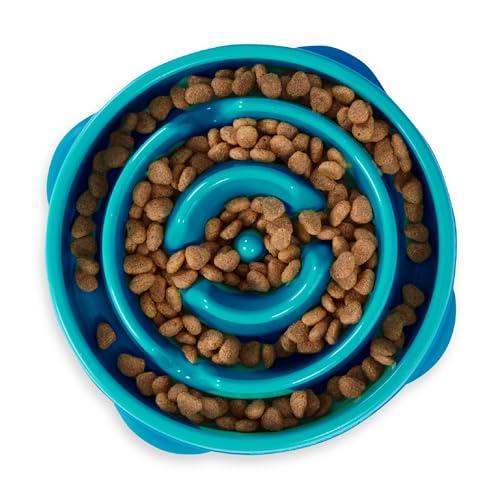
Outward Hound Fun Feeder Slo Bowl, Medium/Mini
Best For: Small dogs, puppies, and first-time buyers
Material: BPA-free plastic
Capacity: Up to 2 cups
What We Like
- Lowest-cost entry point
- Same proven maze design
- Top-rack dishwasher safe
- Compact for travel
What We Don't Like
- Too small for dogs over 30 lb
- Lightweight and easier to flip
If you want to test whether your dog will tolerate a slow feeder before investing in a premium model, the Outward Hound Fun Feeder Slo Bowl, Medium/Mini is the obvious budget pick. It uses the same ridge pattern as our top pick but costs roughly half the price and holds about two cups of food — perfect for small dogs, puppies, or as a travel backup.
The trade-offs are size and weight. The Medium/Mini is too small for any dog over 30 pounds as a primary bowl, and its light weight makes it easier to flip. We recommend it as a trial bowl or a travel backup rather than the only slow feeder for a medium or large dog. Still, for the price, it delivers the same slowing effect that the Veterinary Evidence study documented, and it is just as easy to clean.
 Best Ceramic
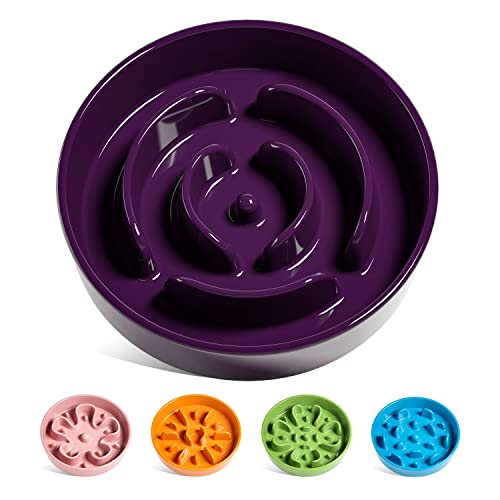
LE TAUCI Ceramic Slow Feeder Dog Bowl
Best For: Dogs that flip plastic bowls; owners avoiding plastic
Material: Lead-free ceramic
Capacity: 1.5 cups
What We Like
- Heavy and stable
- No plastic contact with food
- Microwave and dishwasher safe
- Smooth glaze resists scratches
What We Don't Like
- Can chip or crack if dropped
- Limited to small and medium dogs
- Higher price
The LE TAUCI Ceramic Slow Feeder Bowl is our recommendation for owners who want a non-plastic option or whose dogs treat lightweight bowls like hockey pucks. At roughly two pounds, it stays put on hardwood and tile floors, and the smooth, lead-free glaze is easier to sanitize than scratched plastic.
Ceramic does come with caveats. The Hartpury study found that ceramic bowls can harbor a diverse population of bacteria if not cleaned thoroughly, so daily washing — preferably in the dishwasher — is important. Ceramic can also chip if dropped on a hard floor. That said, for dogs with plastic allergies, sensitive skin, or a habit of flipping lighter bowls, the LE TAUCI is a worthwhile upgrade. We cover the broader plastic-versus-ceramic debate in our ceramic vs plastic slow feeder guide.
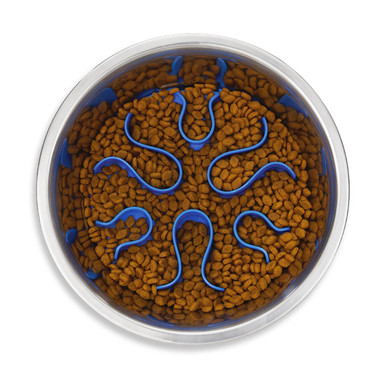 Best Stainless Steel
Outward Hound Fun Feeder Stainless Steel Slo Bowl
Best For: Owners who want the most hygienic, durable option
Material: Stainless steel with removable plastic insert
Capacity: 2 cups
What We Like
- Most hygienic material per veterinary research
- Removable insert doubles as standard bowl
- Dishwasher safe
- Won’t crack or chip
What We Don't Like
- Heavier than plastic
- Can be noisy for metal-tag dogs
- Only 2-cup capacity
For owners who prioritize hygiene, the Outward Hound Fun Feeder Stainless Steel Slo Bowl is our top metal pick. The Hartpury University study found that stainless steel harbors fewer bacteria than plastic or ceramic, and it will not scratch, chip, or absorb odors over time. The bowl comes with a removable blue maze insert that sits inside the stainless steel dish; you can use it as a slow feeder or remove the insert for a standard bowl.
The trade-off is weight and noise: stainless steel is heavier than plastic and can clang against metal tags. It also holds a moderate 2 cups, so it is best for small-to-medium dogs rather than giant breeds. If you have a very large dog, pair this with the feeding strategies in our best slow feeder for large dogs guide.
Comparison Table
| Feature | Outward Hound Slo Bowl | Outward Hound Medium/Mini | LE TAUCI Ceramic | Outward Hound Stainless Steel |
|---|---|---|---|---|
| Best for | Most dogs | Small dogs / trial | Bowl-flippers / plastic-free | Hygiene-focused owners |
| Material | BPA-free plastic | BPA-free plastic | Lead-free ceramic | Stainless steel with removable insert |
| Capacity | 1–4 cups | Up to 2 cups | 1.5 cups | 2 cups |
| Dishwasher safe | Top rack | Top rack | Yes | Yes |
| Weight | Light | Very light | Heavy (~2 lb) | Moderate |
| Price range | $8–$18 | $8–$12 | $18–$24 | $12–$18 |
| Our rating | 4.8 / 5 | 4.5 / 5 | 4.4 / 5 | 4.6 / 5 |
Slow Feeder Buying Guide
Choose the right size
A slow feeder should hold at least your dog’s single meal portion with room left over for the kibble to move through the maze. As a rule of thumb:
- Toy breeds (under 20 lb): 1-cup capacity
- Small to medium breeds (20–50 lb): 2-cup capacity
- Large breeds (50–90 lb): 3–4 cups
- Giant breeds (over 90 lb): 5+ cups
Our slow feeder bowl size guide breaks this down by specific breed and body condition.
Pick the right material
- Plastic: Affordable, lightweight, and available in the most designs. Choose BPA-free, food-grade plastic and replace the bowl once it shows deep scratches. This is the best starting point for most owners.
- Ceramic: Heavy, stable, and free of plastic. Ideal for dogs that flip bowls or owners worried about chemical leaching. Requires careful handling to avoid chips.
- Stainless steel: The most hygienic option per the Hartpury research, but slow feeder designs in stainless steel are less common and often have simpler patterns.
- Silicone: Flexible and often collapsible. Good for travel or as a lick-mat alternative, but less durable for daily meals.
Match the maze to your dog
Not every pattern works for every dog. Shallow, wide ridges are best for flat-faced breeds like Bulldogs and Pugs. Deeper, more complex mazes challenge fast eaters but can frustrate nervous dogs. If your dog walks away from the bowl, the puzzle is probably too hard.
Prioritize cleaning
Bacteria and biofilm grow fastest in scratches and narrow crevices. Look for dishwasher-safe bowls with channels wide enough to fit a sponge or bottle brush. Daily cleaning is non-negotiable, especially for ceramic and plastic bowls.
FAQs
Frequently Asked Questions
Do slow feeder bowls actually work?
Yes. A 2016 peer-reviewed study in Veterinary Evidence found that dogs eating from a slow feeder took significantly longer to finish a meal than when using a standard bowl (P = 0.006). The researchers noted that dogs became slightly faster with practice, but still ate more slowly than from a normal bowl.
Are slow feeder bowls safe for all dogs?
Most healthy dogs can use a slow feeder, but flat-faced breeds, puppies under six months, and dogs with dental pain, neck problems, or anxiety may do better with a shallow design or a lick mat. Always consult your veterinarian if your dog has a medical condition.
Can slow feeders prevent bloat?
Slow feeders reduce one risk factor for bloat (gastric dilatation-volvulus): rapid eating. However, bloat is multifactorial, involving breed genetics, body shape, exercise timing, and meal size. A slow feeder is a useful tool but not a guarantee. Read more in our guide to why dogs eat too fast.
How do I clean a slow feeder bowl?
Rinse the bowl after each meal and wash it daily, either in the dishwasher on the top rack or by hand with hot soapy water and a bottle brush for narrow channels. Replace plastic bowls when they develop deep scratches, which can harbor bacteria.
Are ceramic slow feeders better than plastic?
Ceramic is heavier and more stable, and it avoids plastic contact with food. However, research from Hartpury University found that ceramic bowls can host a diverse range of bacteria if not cleaned thoroughly. Plastic is lighter and cheaper but can scratch and may contain BPA or phthalates if not labeled food-safe. We compare both materials in detail in our ceramic vs plastic slow feeder guide.
What size slow feeder should I buy?
Choose a bowl that holds at least your dog's single meal portion. Toy breeds need about 1 cup, medium breeds 2 cups, large breeds 3–4 cups, and giant breeds 5 or more cups. See our slow feeder bowl size guide for breed-specific recommendations.
Final Verdict
For most households, the Outward Hound Fun Feeder Slo Bowl remains the best slow feeder dog bowl of 2026. It is affordable, widely available, backed by a proven maze design, and easy to clean. If your dog flips plastic bowls, upgrade to the LE TAUCI Ceramic Slow Feeder Bowl. For the most hygienic option, the Outward Hound Fun Feeder Stainless Steel Slo Bowl is the bowl we recommend.
Slowing down mealtime is one of the lowest-cost changes you can make for your dog’s digestive health. Pair the right bowl with consistent portion sizes and a calm feeding environment, and you will likely see fewer episodes of regurgitation, less post-meal restlessness, and a more satisfied dog.
If you are not sure which category fits your dog, browse all of our tested best picks or sign up below for more research-backed feeding guides.
References
- Buckley, L.A. & Lees, J. (2016). “Go slow feeding bowls: how effective are they at getting dogs to eat more slowly?” Veterinary Evidence, 1(4). https://veterinaryevidence.org/index.php/ve/article/download/71/version/62/93
- “Counseling Clients on Food Bowl Selection: What’s the Dish?” Today’s Veterinary Nurse. https://www.todaysveterinarynurse.com/nutrition/counseling-clients-on-food-bowl-selection-whats-the-dish/