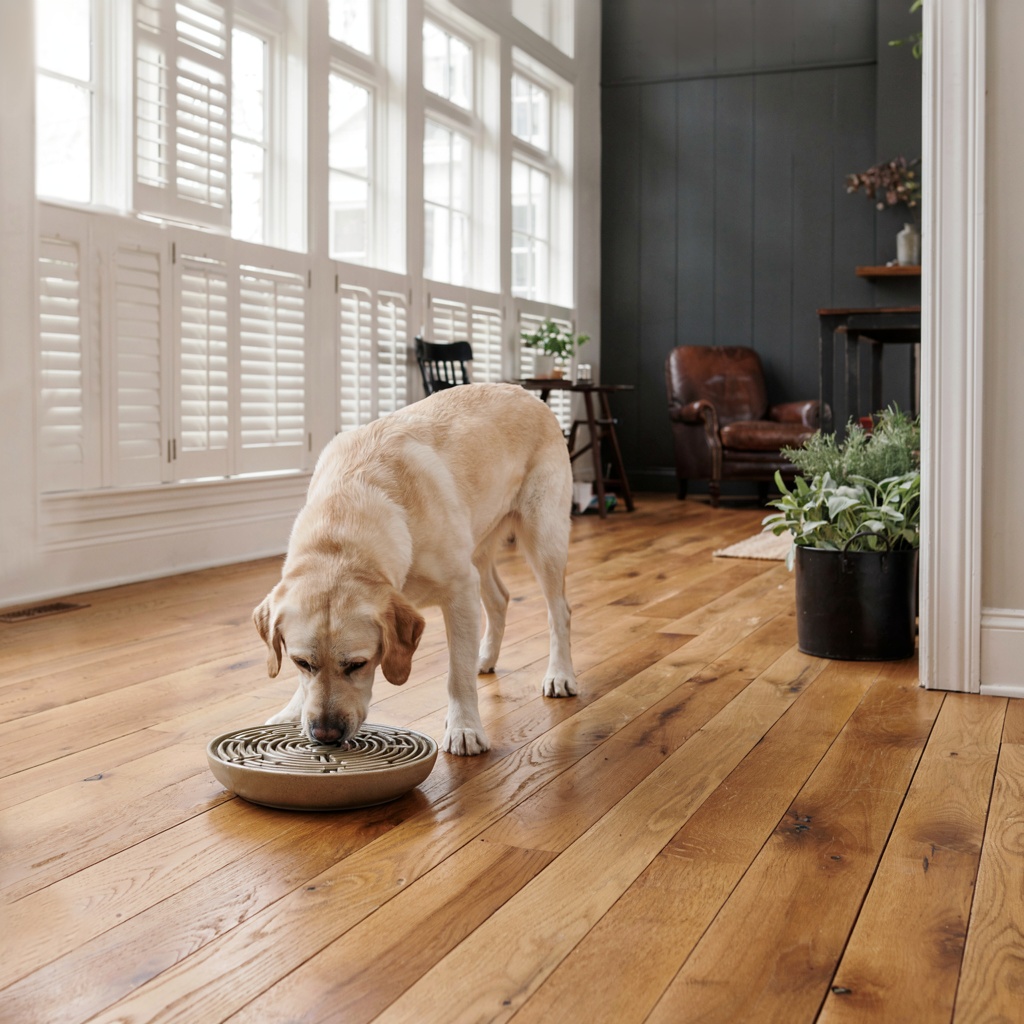
Large dogs do everything bigger — including eating too fast. A Labrador or German Shepherd can inhale a meal in under a minute, swallowing air along with the kibble. That combination is one reason large and deep-chested breeds are at higher risk for gastric dilatation-volvulus (GDV), commonly known as bloat. A slow feeder bowl will not eliminate that risk, but it is one of the easiest tools to reduce one contributing factor: speed eating.
Our top pick for most large breeds is the Outward Hound Fun Feeder Slo Bowl in the large size. It holds up to four cups, has a non-slip base, and uses the same maze design that has made the Slo Bowl the category leader. If you have multiple large dogs or want the most bowls per dollar, the MateeyLife Slow Feeder Dog Bowls 2PCS is the value pick. For dogs that eat more comfortably from a raised position, the XIAZ Elevated Dog Bowls combines an adjustable stand with a built-in slow feeder.
Why Large Dogs Need a Different Slow Feeder
Not every slow feeder is built for a big dog. Small bowls frustrate large breeds because their muzzles do not fit, the capacity is too low for a single meal, and lightweight dishes slide or tip under enthusiastic paws. A large-breed slow feeder needs three things above all:
- Enough capacity. A 70-pound dog eating a dry-food diet may need 3–4 cups per meal. A bowl that holds only one cup turns dinner into a refill exercise.
- A wide, stable base. Narrow or lightweight bowls get pushed across the floor. Look for diameters of at least 9–10 inches and non-slip feet or a weighted rim.
- Maze spacing for broad muzzles. Very tight ridges work for small dogs but block large jaws. Wide, deep channels let big dogs use their tongues without giving up.
Bloat risk is the underlying reason many owners search for a slow feeder in the first place. According to WebMD Pets, large and giant breeds — especially deep-chested dogs like Great Danes, German Shepherds, Standard Poodles, and Weimaraners — are at highest risk for GDV. Dogs over 99 pounds have roughly a 20% lifetime risk. Rapid eating, one large meal per day, and swallowed air are all identified risk factors. A slow feeder addresses the speed issue directly, but it should be paired with multiple smaller meals and restricted exercise around feeding time.
How We Chose the Best Slow Feeders for Large Breeds
We applied the same research-backed criteria we use in our main best slow feeder dog bowls guide, with extra weight on capacity and stability for big dogs:
- Capacity and size fit. The bowl must hold at least a full meal for a large dog and be wide enough for broad muzzles.
- Stability. Non-slip bases, wide footprints, and heavier materials score higher.
- Slowing effectiveness. A 2016 study in Veterinary Evidence confirmed that slow feeders significantly extend eating time. We looked for maze patterns that work for fast eaters without being so hard that large dogs quit.
- Material safety. We prefer BPA-free plastic, lead-free ceramic, or stainless steel. A Hartpury University study cited by Today’s Veterinary Nurse found that stainless steel is the most hygienic option, while plastic can harbor bacteria in scratches.
- Cleaning. Large bowls are harder to scrub by hand, so dishwasher-safe designs get preference.
- Value. Price is judged against durability and capacity, not in isolation.
Top 3 Slow Feeder Dog Bowls for Large Breeds
 Top Pick
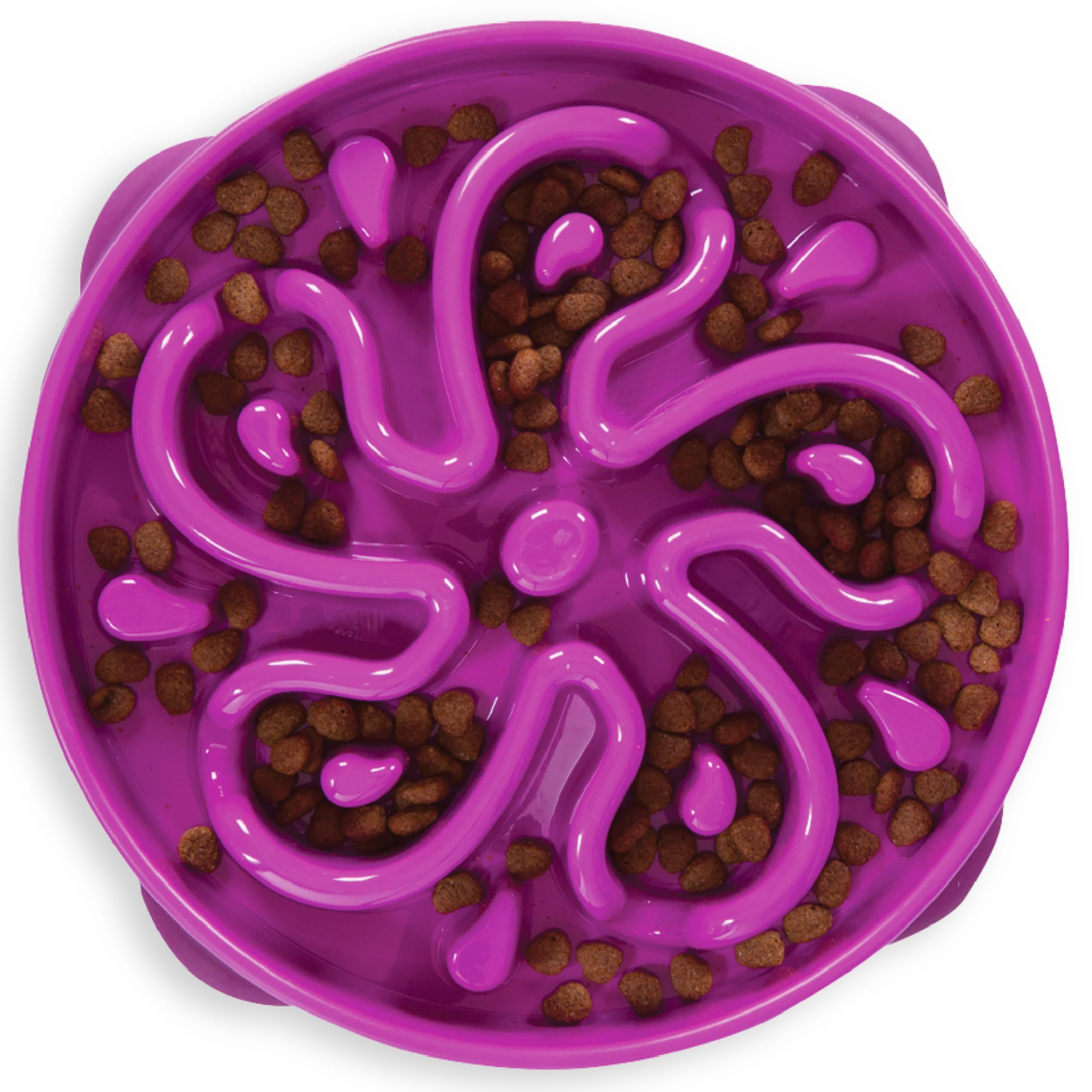
Outward Hound Fun Feeder Slo Bowl, Large
Best For: Most large breeds, including Labradors and German Shepherds
Material: BPA-free plastic
Capacity: Up to 4 cups
What We Like
- Proven maze design slows eating
- Non-slip base
- Top-rack dishwasher safe
- Wide enough for large muzzles
What We Don't Like
- Lightweight dogs can flip it
- Not ideal for giant breeds over 100 lb
The Outward Hound Fun Feeder Slo Bowl, Large is the obvious starting point for large breeds. It is the large version of our overall top pick, and the blue notch pattern is one of the best-selling large-breed slow feeders on Amazon. The maze ridges are spaced widely enough for a big dog’s tongue and muzzle, and the four-cup capacity covers most large breeds for a single meal.
We recommend this bowl for Labradors, Golden Retrievers, German Shepherds, Boxers, and similarly sized dogs. The non-slip base keeps it in place on most floors, and the top-rack dishwasher-safe design makes daily cleaning practical. The main limitation is weight: if your dog is a determined bowl flipper, the plastic construction can still move. In that case, the elevated option below or a ceramic bowl may be a better fit.
 Best Value
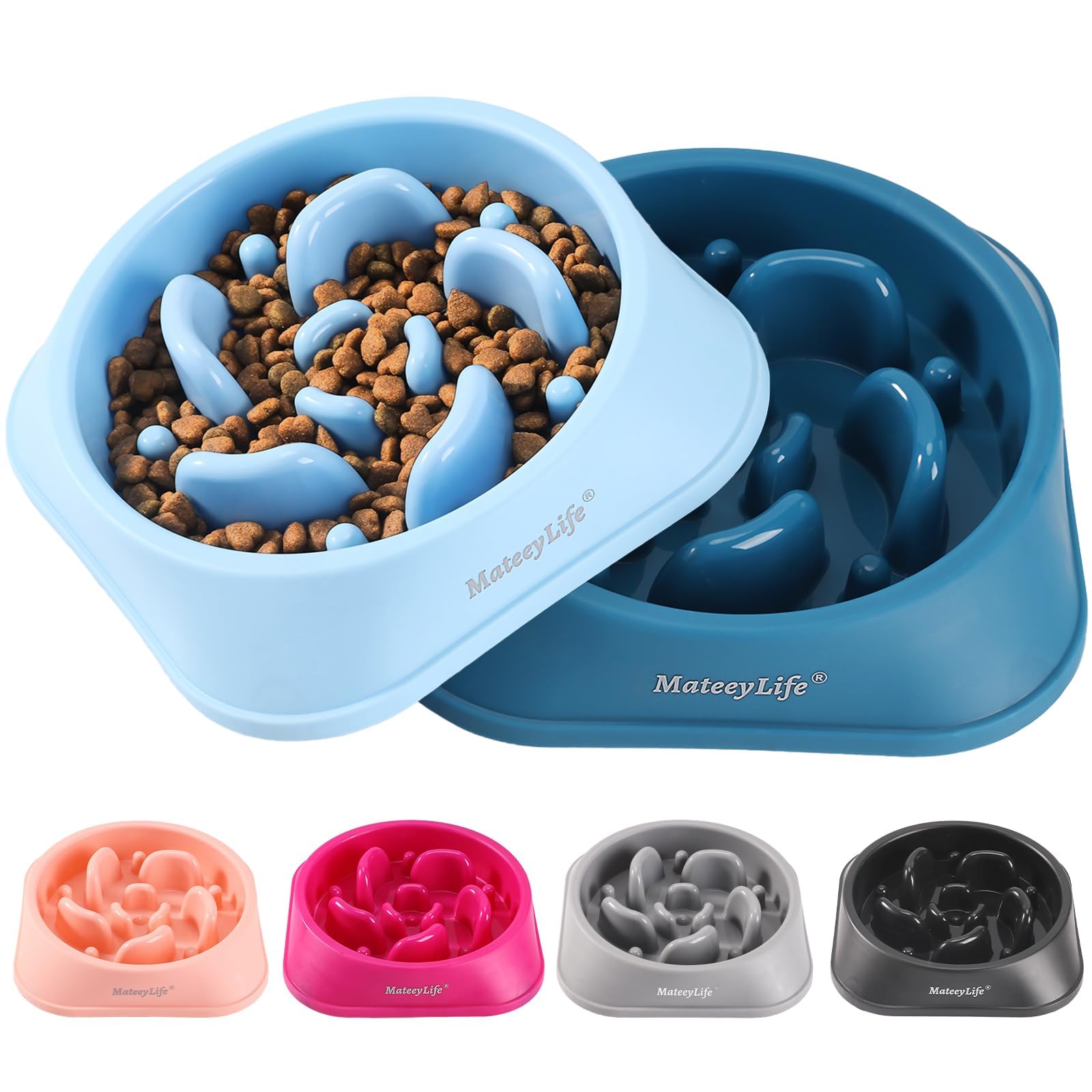
MateeyLife Slow Feeder Dog Bowls 2PCS
Best For: Multi-dog homes and budget-conscious owners
Material: BPA-free plastic
Capacity: Up to 2 cups per bowl
What We Like
- Two bowls per pack
- Anti-slip base on each bowl
- Dishwasher safe
- Maze pattern slows most fast eaters
What We Don't Like
- Only 2 cups per bowl
- May need refilling for very large dogs
- Less durable than premium options
If you have two large dogs or want a backup bowl for travel, the MateeyLife Slow Feeder Dog Bowls 2PCS is the best value. You get two BPA-free puzzle bowls for roughly the price of one premium bowl. Each holds about two cups, which is enough for a meal for many medium-to-large breeds, though very big dogs may need a refill.
The maze pattern is simpler than the Outward Hound Slo Bowl, which is fine for dogs new to slow feeders or those that get frustrated by more complex designs. The anti-slip rubber pads on the base help, though the bowls are still light enough to slide if a heavy dog pushes hard. For the price, it is a low-risk way to test whether slow feeding works for your dog before investing in a larger single bowl.
 Best Elevated
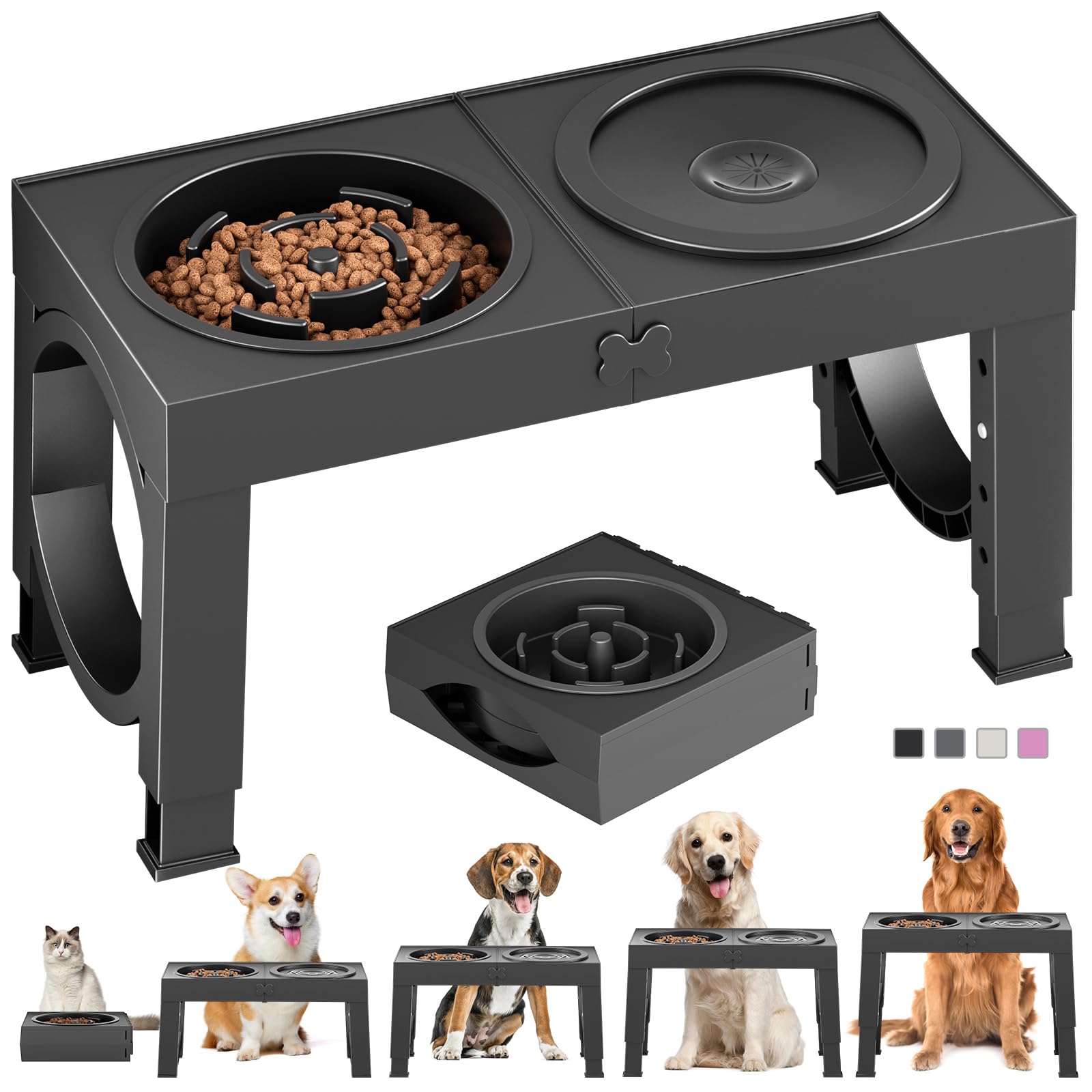
XIAZ Elevated Dog Bowls with Slow Feeder
Best For: Large dogs that eat more comfortably from a raised bowl
Material: Plastic stand + stainless steel bowls
Capacity: 1L per bowl
What We Like
- Adjustable to 5 heights
- Includes food and water bowls
- Sturdy stand resists tipping
- Stainless steel bowls are hygienic
What We Don't Like
- Elevated feeding may increase bloat risk for some dogs
- Assembly required
- Takes up more floor space
Some large breeds — especially older dogs with neck or joint issues — eat more comfortably from a raised position. The XIAZ Elevated Dog Bowls offers five adjustable heights, from roughly 9 to 14 inches, and includes a slow feeder bowl plus a standard stainless steel water bowl. The stand is wide and stable, which helps prevent the tipping that happens with lightweight single bowls.
There is an important caveat. Some veterinary research has associated raised feeders with an increased risk of bloat in certain large and giant breeds. The evidence is not uniform, but if your dog is a high-risk breed for GDV, consult your veterinarian before switching to an elevated feeder. For dogs with diagnosed arthritis, megaesophagus, or other conditions where elevation helps, the XIAZ is a practical option that still incorporates a slow feeder.
Comparison Table
| Feature | Outward Hound Slo Bowl Large | MateeyLife 2PCS | XIAZ Elevated |
|---|---|---|---|
| Best for | Most large breeds | Multi-dog homes / budget | Dogs needing raised bowls |
| Material | BPA-free plastic | BPA-free plastic | Plastic stand + stainless steel |
| Capacity | Up to 4 cups | 2 cups per bowl | 1L per bowl |
| Dishwasher safe | Top rack | Top rack | Stainless bowls only |
| Base | Non-slip | Anti-slip pads | Wide elevated stand |
| Price range | $9–$15 | $8–$12 | $18–$25 |
| Our rating | 4.8 / 5 | 4.5 / 5 | 4.3 / 5 |
What to Look For in a Large-Breed Slow Feeder
Capacity by weight
Use this as a starting point, then adjust for your dog’s body condition and food calorie density:
- 50–70 lb: 2–3 cups per meal
- 70–90 lb: 3–4 cups per meal
- 90+ lb: 4+ cups per meal, or consider splitting meals
If a single bowl cannot hold the full meal, the bowl is too small. See our slow feeder bowl size guide for breed-specific recommendations.
Stability features
A slow feeder is useless if your dog flips it. Look for:
- A diameter of at least 9 inches for large breeds
- A non-slip rubber rim or base
- A weight of at least half a pound, or a stand that anchors the bowl
Material choice: plastic, ceramic, or stainless steel?
The most common follow-up question we get is whether plastic is “good enough” or whether it is worth switching to a non-plastic material. The honest answer is that plastic is fine for most dogs, but ceramic and stainless steel solve specific problems plastic cannot — and owners of large breeds cite those problems more than any other.
- Plastic (BPA-free). Light, affordable, and available in the most maze designs and sizes — which is why our top pick is plastic. The trade-off: plastic scratches over time, and those scratches can harbor bacteria. It is also the lightest material, so large breeds can push or flip it. Replace a plastic slow feeder when the maze ridges show visible wear, and do not put off replacing a deeply scratched bowl — see our guide to how to clean a slow feeder bowl for the maintenance routine that extends a plastic bowl’s life.
- Stainless steel. The most hygienic and durable option, and the choice for dogs with sensitive skin, recurrent chin acne, or a known plastic sensitivity. A Hartpury University study cited by Today’s Veterinary Nurse found stainless steel the most hygienic bowl material because it does not scratch the way plastic does. It is also heavier than plastic of the same size, which helps with the bowl-flipping problem large breeds are famous for. The main downside is that stainless slow feeders are harder to find and pricier.
- Ceramic. Heavy and stable — the best material for a determined bowl flipper, because a ceramic slow feeder simply does not move. It is also hygienic and easy to clean. The trade-offs are weight and fragility: ceramic can chip or shatter if dropped on a hard floor, and a large ceramic bowl is genuinely heavy to handle at feeding time.
- Silicone (as an insert or mat). Some owners add a silicone slow-feeder mat or insert on top of a stainless or ceramic bowl. Silicone is easy to clean and dishwasher-safe, but it is not a standalone bowl for a large dog — a big breed will simply drag a light silicone mat across the floor.
- Wood. A note on the wooden slow feeders that show up in DIY and boutique circles: they look beautiful, but wood is porous and hard to sanitize, and most veterinarians do not recommend it for food contact. If you love the look, treat it as decorative and feed from a food-safe bowl inside it.
Here is how the three mainstream materials compare for a large dog:
| Material | Hygiene | Weight / stability | Durability | Best for |
|---|---|---|---|---|
| BPA-free plastic | Good (replace when scratched) | Light — may slide or flip | Moderate | Most large breeds, budget, variety of mazes |
| Stainless steel | Excellent (does not scratch) | Heavy — resists flipping | High | Sensitive skin, chin acne, hygiene priority |
| Ceramic | Excellent | Heaviest — will not flip | High (but chips if dropped) | Determined bowl flippers, stable feeding |
If your dog has skin issues around the muzzle, flips every plastic bowl you buy, or you simply want the most hygienic option, here are the two non-plastic slow feeders we recommend for large breeds:
 Non-Plastic Pick
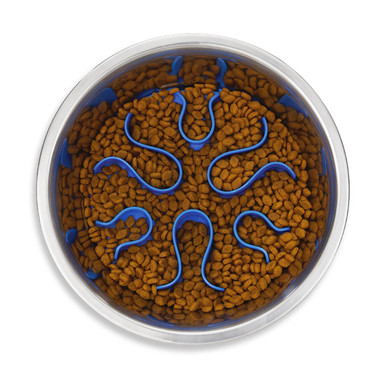
Outward Hound Fun Feeder Stainless Steel Slo Bowl
Best For: Large breeds with sensitive skin or a plastic sensitivity
Material: Stainless steel
Capacity: Up to 4 cups
What We Like
- Same proven Slo Bowl maze in hygienic stainless steel
- Heavier than the plastic version — harder to flip
- Does not scratch, so it stays cleaner long-term
- Dishwasher safe
What We Don't Like
- Pricier than the plastic version
- Fewer color options
- Can dent if dropped on hard flooring
 Heavy & Stable
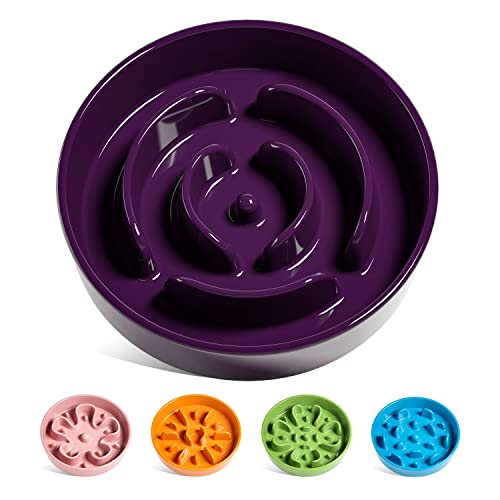
LE TAUCI Ceramic Slow Feeder Dog Bowl
Best For: Determined bowl flippers and owners who want a heavy, stable bowl
Material: Ceramic
Capacity: Up to 2 cups
What We Like
- Heavy ceramic base will not slide or flip
- Hygienic and easy to clean
- Microwave and dishwasher safe
- Solid feel large-breed owners prefer
What We Don't Like
- Only ~2 cups — large breeds may need a refill or two bowls
- Can chip or shatter if dropped
- Heavy to handle at feeding time
When to avoid elevated bowls
Do not use an elevated feeder solely because your dog is large. Some studies suggest raised bowls may increase GDV risk in deep-chested breeds. Use elevation only if your veterinarian recommends it for a specific medical reason.
Which Slow Feeder for Your Breed?
Different large breeds eat differently. These are the patterns we see most often in owner reports and feeding research:
Labradors and Golden Retrievers
Labs and Goldens are the classic speed eaters — food motivation is practically a breed trait. The good news: they also tend to be persistent rather than easily frustrated, so a medium-depth maze like the Outward Hound Slo Bowl Large works well. Most Labradors do fine with 2–3 cups per meal, which the 4-cup capacity covers comfortably. If your Lab figures out the pattern within a week and starts finishing in two minutes again, rotate between two different maze designs to keep the challenge fresh.
German Shepherds and Boxers
Shepherds and Boxers combine speed eating with deep chests — the combination that puts them on the high-risk list for bloat. For these breeds, a slow feeder is only one piece of the routine: split the daily ration into two or three smaller meals, keep exercise calm for an hour around feeding, and use the largest-capacity bowl you can so each meal still fits in one serving. The Outward Hound Slo Bowl Large is the right starting point here too; Boxers’ shorter muzzles sometimes prefer slightly wider channel spacing, so watch for frustration in the first week.
Great Danes, Mastiffs, and other 100 lb+ giants
Giant breeds are the hardest to shop for, and honesty matters here: most “large” slow feeders — including our top pick — are sized for dogs up to roughly 90 pounds. A Great Dane eating 4–6 cups per meal will overflow them. For giants, the practical setup is:
- A heavy stainless steel or ceramic slow feeder in the largest available size — the weight also defeats the paw-flipping that giant breeds excel at.
- Three smaller meals instead of two — this reduces per-meal volume, which matters more for GDV risk than any bowl feature.
- A wide, floor-level stance. Skip elevated feeders unless your vet specifically recommends one; Danes sit squarely in the highest-risk group for bloat.
If your giant breed eats from a standard large slow feeder but finishes with half the meal still in the bowl because the maze is too tight for a huge muzzle, that is a fit problem, not a training problem — switch to wider channel spacing or a puzzle mat instead.
How to Transition Your Dog to a Slow Feeder
Most dogs adapt to a slow feeder within 3–7 days. The ones who struggle are usually introduced to a full bowl of a difficult maze on day one. A gradual transition works better:
- Days 1–2: Small portions. Put only a quarter of the meal in the slow feeder, the rest in the regular bowl. Your dog learns the maze pays out food without facing a wall of frustration when hungry.
- Days 3–4: Half and half. Split the meal evenly between the two bowls. Watch how your dog works the maze — if they give up and walk to the regular bowl immediately, the maze is too hard.
- Day 5+: Full switch. Serve the entire meal in the slow feeder. Eating time should stretch from under a minute to 5–10 minutes — in the 2016 Veterinary Evidence study, slow feeders significantly extended eating time, which is the mechanism behind every benefit claimed for these bowls.
Signs the maze is too difficult: head tossing, whining at the bowl, walking away from food, or attacking the bowl to flip it. Drop to a simpler pattern (the MateeyLife’s gentler maze, or a snuffle mat) for a week, then try again. A slow feeder should make eating take longer, not make your dog dread it.
FAQs
Frequently Asked Questions
Can a slow feeder prevent bloat in large dogs?
A slow feeder reduces one risk factor for bloat — rapid eating and swallowed air — but it does not prevent gastric dilatation-volvulus (GDV). Bloat is multifactorial, involving breed, chest shape, age, meal size, exercise timing, and stress. For high-risk breeds, talk to your veterinarian about prophylactic gastropexy and a comprehensive feeding plan.
Do slow feeder bowls actually work?
Yes — for their core purpose. A 2016 study in Veterinary Evidence confirmed that slow feeder bowls significantly extend eating time compared with standard bowls. Slower eating means less swallowed air, better digestion, and fewer regurgitation episodes. What they do not do is guarantee bloat prevention or fix underlying health issues — they address eating speed only.
Do vets recommend slow feeders?
Veterinarians commonly recommend slow feeders for dogs that gulp meals, regurgitate after eating, or need weight management, because extended eating time improves satiety and digestion. Vets are also clear about the limits: a slow feeder is one tool within a broader feeding routine, not a medical intervention. For deep-chested breeds at high GDV risk, vets typically pair slow feeding with multiple smaller meals and exercise timing — and sometimes discuss prophylactic gastropexy.
Can large-breed puppies use a slow feeder?
Yes, with two adjustments. Choose a shallow, simpler maze — puppies give up more easily than adults — and keep their feeding schedule at three to four smaller meals per day rather than two. Slow feeding a large-breed puppy has a side benefit: it builds calm mealtime habits before the dog reaches adult size, when a 90-pound speed eater is much harder to retrain.
How long does it take a dog to adjust to a slow feeder?
Most dogs adapt within 3–7 days, especially if you transition gradually — starting with a small portion in the slow feeder and the rest in the regular bowl, then increasing over several days. If your dog is still frustrated after a week (head tossing, walking away from food, flipping the bowl), the maze is likely too difficult; switch to a simpler pattern and try again later.
What size slow feeder does a large dog need?
Choose a bowl that holds at least one full meal. Most large breeds need 2–4 cups per meal, and giant breeds may need 4 or more. The bowl should also be wide enough for your dog's muzzle — usually at least 9 inches in diameter. See our slow feeder bowl size guide for breed-by-breed guidance.
Are elevated slow feeders better for large breeds?
Elevated feeders can help dogs with arthritis, neck pain, or certain swallowing disorders, but they are not automatically better for all large breeds. Some veterinary studies have linked raised bowls to an increased risk of bloat in deep-chested dogs. Use an elevated feeder only if your vet recommends it.
Why does my large dog flip the slow feeder bowl?
Bowl flipping usually means the bowl is too light, too small, or too frustrating. Try a heavier ceramic bowl, a wider-based plastic bowl, or a model with stronger non-slip feet. If your dog walks away from the food, the maze may be too difficult.
How do I clean a large slow feeder bowl?
Rinse after each meal and wash daily. Dishwasher-safe bowls are easiest for large models because hand-scrubbing every ridge takes time. Replace plastic bowls when they develop deep scratches, which can harbor bacteria.
Final Verdict
For most large breeds, the Outward Hound Fun Feeder Slo Bowl, Large is the best slow feeder. It has the right capacity, a proven maze design, and a price that makes it easy to try. The MateeyLife 2PCS is the smartest choice for multi-dog households or owners who want a backup, and the XIAZ Elevated Dog Bowls is the option to consider when a veterinarian recommends raised feeding.
Remember that a slow feeder is just one part of a safer feeding routine. Splitting the daily food into two or three meals, avoiding vigorous exercise around mealtime, and keeping water intake moderate before and after eating all help reduce bloat risk in large dogs. If you are not sure whether your breed is high risk, read our guide to why dogs eat too fast or browse more of our best picks.
References
- Buckley, L.A. & Lees, J. (2016). “Go slow feeding bowls: how effective are they at getting dogs to eat more slowly?” Veterinary Evidence, 1(4). https://veterinaryevidence.org/index.php/ve/article/download/71/version/62/93
- “Counseling Clients on Food Bowl Selection: What’s the Dish?” Today’s Veterinary Nurse. https://www.todaysveterinarynurse.com/nutrition/counseling-clients-on-food-bowl-selection-whats-the-dish/
- WebMD Pets. “Dog Stomach Swelling and Pain: Causes and Treatments.” https://www.webmd.com/pets/dogs/my-dog-swollen-belly
- ScienceDirect Topics. “Gastric Dilatation Volvulus.” https://www.sciencedirect.com/topics/veterinary-science-and-veterinary-medicine/gastric-dilatation-volvulus