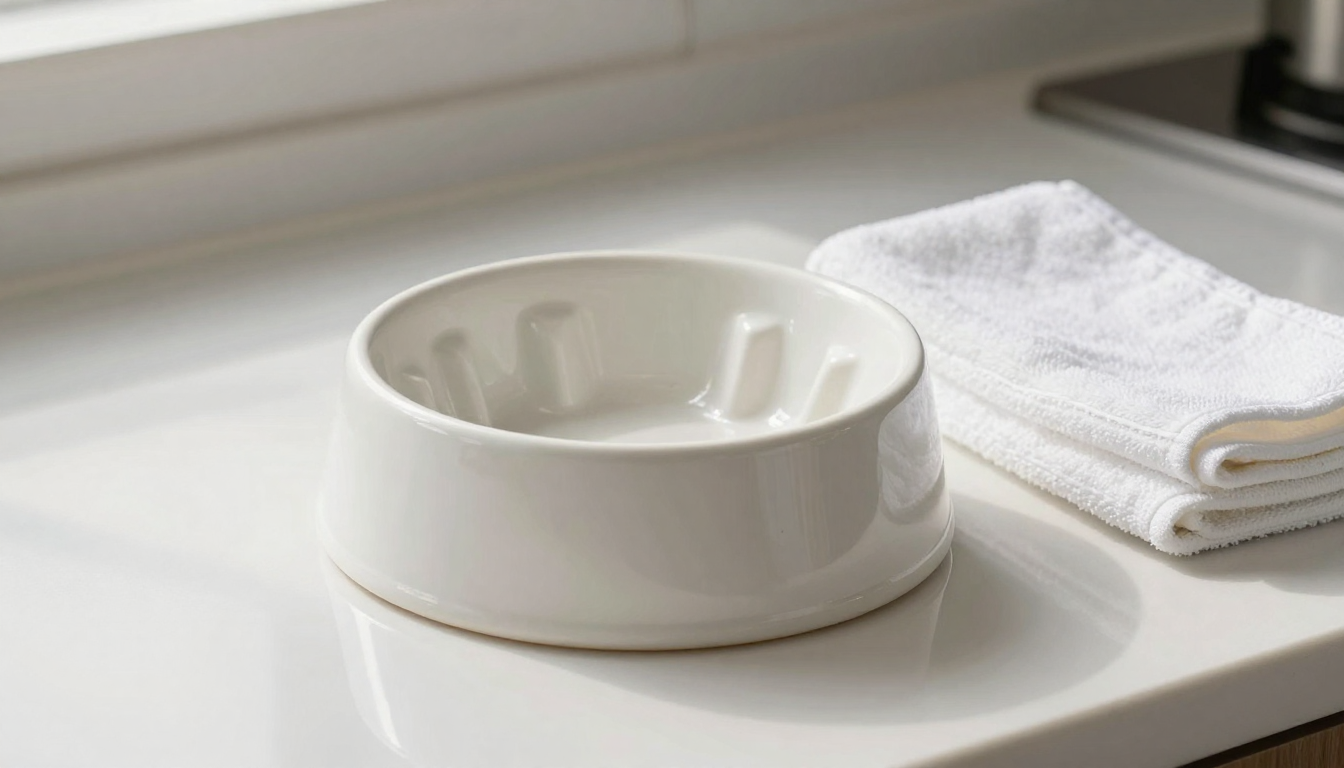
A slow feeder bowl only works if it is clean. The same ridges and channels that slow down a fast eater also trap food particles, saliva, and moisture. Left alone, those residues become a breeding ground for bacteria and biofilm, the slimy layer that protects microorganisms from simple rinsing.
Cleaning a slow feeder is not difficult, but it does require more attention than a flat bowl. This guide covers the daily routine, the weekly deep clean, and the material-specific steps that keep your dog’s bowl hygienic. We also look at what the research says about bacteria in pet bowls and whether the dishwasher really cleans better than hand washing.
Why Cleaning Matters
Dog bowls are often more contaminated than people realize. A 2018 study from Hartpury University Centre found that pet water bowls rank among the most contaminated items in the home. In that study, plastic bowls harbored the highest total bacterial counts, ceramic bowls hosted the greatest diversity of bacteria including E. coli, Salmonella, and MRSA, and stainless steel bowls showed the least bacterial growth overall.
A 2023 study published in BMC Veterinary Research looked at dog food bowls specifically. Researchers tested 96 bowls for total bacteria, Enterobacteriaceae, Salmonella, Campylobacter, and verotoxigenic E. coli. They found that bowls used for wet food had higher bacterial loads than those used for dry food, and bowls washed by hand had higher bacterial counts than bowls washed in a dishwasher. Notably, the study excluded slow feeder bowls from the microbiological analysis because their internal structures make cleaning more difficult — a clear signal that slow feeders need extra care.
The bottom line: a dirty bowl can expose your dog to bacteria, cause unpleasant odors, and even contribute to skin issues such as chin acne. Daily cleaning is the simplest way to reduce that risk.
What You Need
For daily hand washing:
- Hot water
- Dish soap (fragrance-free is fine)
- A bottle brush or narrow brush for grooves
- An old toothbrush for tight corners
- A dedicated sponge or cloth for pet dishes
- A clean towel or drying rack
For weekly deep cleaning:
- White vinegar or baking soda
- A larger basin for soaking
- Optional: dishwasher (if the bowl is labeled dishwasher safe)
Keep pet bowl cleaning tools separate from human dishware tools to avoid cross-contamination.
Daily Cleaning Routine
A slow feeder should be rinsed or washed after every meal. Dried food is much harder to remove than fresh residue, and bacteria begin multiplying within hours.
Step 1: Rinse immediately
Dump any leftover food and rinse the bowl under warm water right after your dog finishes eating. This removes loose particles before they dry and stick.
Step 2: Soak in hot soapy water
Fill the bowl with hot water and a few drops of dish soap. Let it sit for 5–10 minutes. The soak loosens grease and food trapped in the maze ridges.
Step 3: Scrub every ridge and channel
Use a bottle brush to clean the main channels. Switch to an old toothbrush for corners, narrow grooves, and the underside of raised ridges. Pay special attention to areas where food tends to compact, such as the bottom of deep valleys and the edges of the bowl.
Step 4: Rinse thoroughly
Rinse under hot running water until no soap residue remains. Soap residue can alter the taste of food and irritate some dogs.
Step 5: Dry completely
Dry the bowl with a clean towel or place it in a drying rack. Moisture encourages bacterial growth and biofilm, so do not let the bowl air-dry in a puddle.
Weekly Deep Cleaning Routine
Even with daily washing, biofilm can build up over time. A weekly deep clean helps remove it.
Option A: Vinegar soak
- Fill the bowl with a solution of one part white vinegar to two parts hot water.
- Let it soak for 15–30 minutes.
- Scrub with a brush, focusing on any slimy or discolored areas.
- Rinse thoroughly and dry.
Vinegar helps break down mineral deposits and biofilm. It is generally safe, but rinse well to avoid any lingering smell.
Option B: Baking soda paste
- Mix baking soda with a small amount of water to form a paste.
- Apply the paste to stained or grimy areas.
- Scrub with a brush and let it sit for 10 minutes.
- Rinse thoroughly and dry.
Baking soda is a mild abrasive that can remove stains without scratching most surfaces.
Dishwasher vs. Hand Washing
If your slow feeder is labeled dishwasher safe, the dishwasher is usually the better choice. The 2023 BMC Veterinary Research study found that dishwasher-washed bowls had lower bacterial counts than hand-washed bowls, likely because of the sustained hot water and drying heat.
A 2022 study in PLOS ONE reached a similar conclusion. Bowls washed with hot water or in a dishwasher showed a 1.5-log reduction in aerobic bacteria compared with bowls washed in cold or lukewarm water — roughly a 90 to 99 percent reduction.
Dishwasher tips
- Place the bowl on the top rack to avoid warping from the heating element.
- Use a normal or sanitize cycle.
- Make sure the bowl is positioned so water can reach all the grooves.
- Do not wash pet bowls with human dishes if you are concerned about cross-contamination; most veterinarians consider shared dishwasher cycles safe when using a hot sanitize setting, but use your own judgment.
When to hand wash
- The bowl is not labeled dishwasher safe.
- The bowl has decorative elements, stickers, or a non-slip base that may degrade in the dishwasher.
- You need to clean the bowl between meals and do not want to run a full dishwasher cycle.
Cleaning by Material
Plastic
Plastic slow feeders are usually dishwasher safe on the top rack, but they scratch more easily than other materials. Once a plastic bowl has deep scratches, bacteria can hide in the grooves and the bowl should be replaced. Avoid abrasive scrubbers that create new scratches.
Ceramic
Ceramic bowls are generally dishwasher safe and resist scratches better than plastic. However, chips or cracks can harbor bacteria and expose porous clay underneath. Inspect ceramic bowls weekly, and discard any bowl with chips, cracks, or crazing (fine cracks in the glaze).
Stainless steel
Stainless steel is the easiest material to clean and sanitize. It is non-porous, dishwasher safe, and resistant to scratches. Use a non-abrasive sponge to maintain the surface finish.
Silicone
Silicone lick mats and collapsible bowls can usually be washed in the dishwasher, but they are soft and can retain odors. Soak silicone products in vinegar water weekly to remove smells.
Our Top Picks for Easy Cleaning
 Easiest to Clean
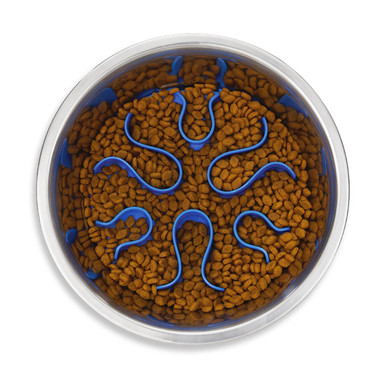
Outward Hound Fun Feeder Stainless Steel Slo Bowl
Best For: Owners who want the easiest-to-sanitize bowl
Material: Stainless steel with removable plastic insert
Capacity: 2 cups
What We Like
- Non-porous stainless steel base
- Removable insert for thorough cleaning
- Dishwasher safe
- Resists scratches and bacteria
What We Don't Like
- Only 2-cup capacity
- Can be noisy with metal tags
- Plastic insert still needs inspection
The Outward Hound Fun Feeder Stainless Steel Slo Bowl is our top pick for hygiene. The stainless steel base is non-porous and dishwasher safe, and the removable plastic insert lets you clean both pieces separately. Because the insert is the only part that touches food, you can replace it if it becomes scratched without replacing the entire bowl.
 Best Ceramic for Cleaning
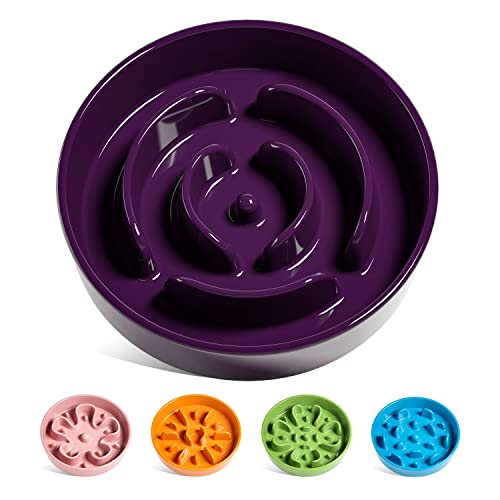
LE TAUCI Ceramic Slow Feeder Dog Bowl
Best For: Owners avoiding plastic who want dishwasher-safe cleaning
Material: Lead-free ceramic
Capacity: 1.5 cups
What We Like
- Smooth glazed surface resists sticking
- Dishwasher safe
- No plastic to scratch or discolor
- Heavy base prevents spills
What We Don't Like
- Can chip if dropped
- Ridges are simple; food residue is limited
- Limited to small and medium dogs
The LE TAUCI Ceramic Slow Feeder Bowl has a smooth, lead-free glaze that rinses clean more easily than textured plastic. Its maze pattern is relatively simple, which means fewer tight corners for food to hide. It is dishwasher safe, but handle it carefully to avoid chips.
 Best Plastic for Cleaning
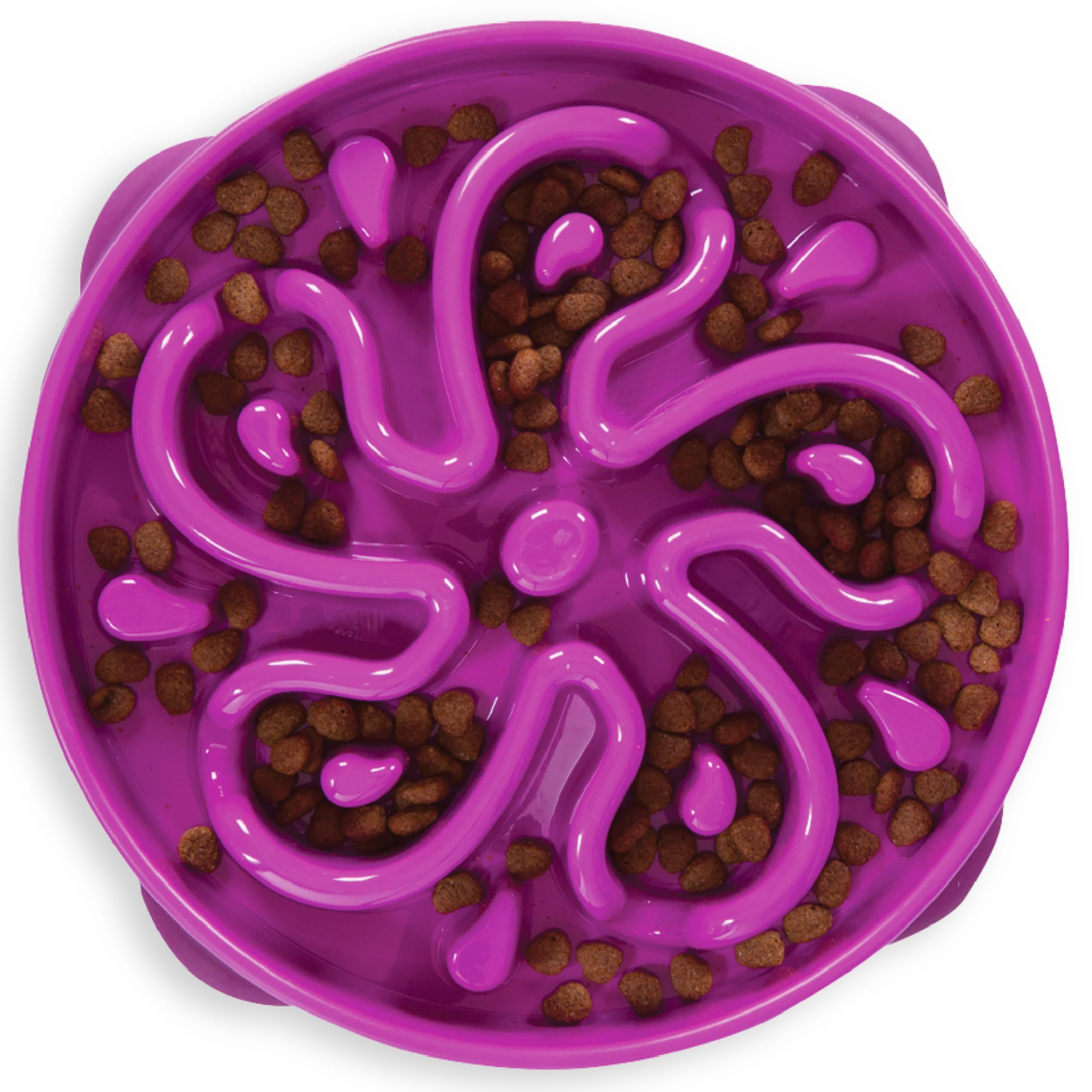
Outward Hound Fun Feeder Slo Bowl
Best For: Owners who want effective slowing and straightforward dishwasher care
Material: BPA-free plastic
Capacity: Up to 4 cups in large size
What We Like
- Top-rack dishwasher safe
- Multiple sizes
- Channels are wide enough to scrub
- Affordable to replace when worn
What We Don't Like
- Plastic scratches over time
- Deep grooves need a brush
- May retain odors if not cleaned promptly
The Outward Hound Fun Feeder Slo Bowl is top-rack dishwasher safe, and its channels are wide enough to fit a bottle brush. The main downside is durability: once the plastic develops deep scratches, the bowl becomes harder to sanitize and should be replaced.
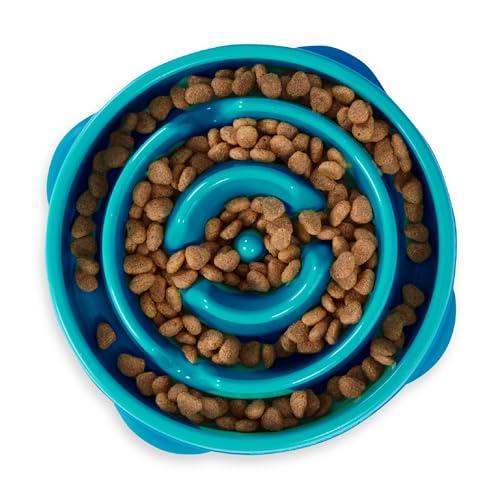 Best Small Bowl for Cleaning
Outward Hound Fun Feeder Slo Bowl, Medium/Mini
Best For: Small dogs and travel use
Material: BPA-free plastic
Capacity: Up to 2 cups
What We Like
- Compact and easy to scrub
- Top-rack dishwasher safe
- Simple maze with fewer hiding spots
- Affordable
What We Don't Like
- Too small for large dogs
- Same scratch limitations as larger plastic bowls
- Lightweight and easier to flip
The Outward Hound Fun Feeder Slo Bowl, Medium/Mini is small enough to clean quickly by hand and fits easily in the dishwasher. It is a good choice for small dogs or as a travel backup.
How Often Should You Replace a Slow Feeder Bowl?
Even with excellent cleaning, slow feeders wear out. Replace a plastic bowl when you notice:
- Deep scratches that do not smooth out
- Cloudiness or discoloration
- Persistent odors after washing
- Chew marks or cracked edges
- A rough or sticky texture
Ceramic bowls should be replaced immediately if they chip or crack. Stainless steel bowls last the longest but should be replaced if they become deeply scratched or dented.
Cleaning Checklist
| Task | Frequency | Why it matters |
|---|---|---|
| Rinse after every meal | Daily | Prevents food from drying and sticking |
| Wash with hot soapy water | Daily | Removes bacteria and biofilm |
| Scrub grooves with a brush | Daily | Reaches areas a sponge misses |
| Deep clean with vinegar or baking soda | Weekly | Breaks down biofilm buildup |
| Run through dishwasher | Weekly (if safe) | Highest bacterial reduction |
| Inspect for scratches or chips | Weekly | Damaged bowls harbor more bacteria |
| Replace worn bowl | As needed | Old scratches cannot be sanitized |
FAQs
Frequently Asked Questions
Can you put slow feeder bowls in the dishwasher?
Yes, if the manufacturer labels the bowl dishwasher safe. Most high-quality plastic, ceramic, and stainless steel slow feeders can go on the top rack. Research shows that dishwasher cleaning reduces bacteria more effectively than typical hand washing.
How often should I clean my dog's slow feeder bowl?
Wash the bowl after every meal with hot soapy water. Do a deeper clean with vinegar or baking soda once a week, and run the bowl through the dishwasher weekly if it is dishwasher safe.
What is the slimy film in my dog's bowl?
The slimy film is biofilm, a colony of bacteria and other microorganisms that stick to surfaces. Biofilm protects bacteria from simple rinsing and is why scrubbing and hot water are important. Vinegar or baking soda soaks help break it down.
Do I need a special brush to clean a slow feeder bowl?
A regular bottle brush works for most channels. An old toothbrush is useful for tight corners and the underside of ridges. Avoid abrasive steel wool on plastic or ceramic because it can scratch the surface and create more places for bacteria to hide.
Can I wash pet bowls with human dishes?
If you use a dishwasher with a hot sanitize cycle, washing pet bowls with human dishes is generally considered safe. If washing by hand, use a separate sponge or brush for pet bowls to avoid cross-contamination.
When should I throw away a slow feeder bowl?
Replace plastic bowls when they have deep scratches, cloudiness, discoloration, or persistent odors. Replace ceramic bowls immediately if they chip or crack. Stainless steel bowls can last years but should be replaced if they become deeply scratched or dented.
Final Verdict
Cleaning a slow feeder bowl takes only a few minutes a day, but it makes a real difference in your dog’s health. Rinse after every meal, wash with hot soapy water and a brush, dry thoroughly, and run the bowl through the dishwasher weekly if it is safe to do so. A weekly vinegar or baking soda soak helps remove biofilm before it becomes a problem.
If you want the easiest cleaning experience, choose stainless steel. If you prefer ceramic, look for a smooth glaze and simple maze design. If you choose plastic, accept that you will need to replace the bowl more often as scratches accumulate.
For more feeding safety guidance, see our guides to ceramic vs plastic slow feeders, the best slow feeder dog bowls, and our slow feeder bowl size guide.
References
- Carroll, A. & Wright, C. (2018). “Microbiological assessment of canine drinking water: the impact of bowl construction material on the quantity and species of bacteria present in water bowls.” Hartpury University Centre. https://hartpuryresearchjournal.wordpress.com/2018/08/29/microbiological-assessment-of-canine-drinking-water-the-impact-of-construction-material-on-the-quantity-and-species-of-bacteria-present-in-water-bowls/
- “Pet feeding habits and the microbiological contamination of dog food bowls: effect of feed type, cleaning method and bowl material.” BMC Veterinary Research, 2023. https://link.springer.com/article/10.1186/s12917-023-03823-w
- “Survey evaluation of dog owners’ feeding practices and dog bowls’ hygiene assessment in domestic settings.” PLOS ONE, 2022. https://journals.plos.org/plosone/article?id=10.1371/journal.pone.0259478
- FDA. “Think Pet Food and Feeding!” https://www.fda.gov/media/75722/download
- “Counseling Clients on Food Bowl Selection: What’s the Dish?” Today’s Veterinary Nurse, 2022. https://www.todaysveterinarynurse.com/wp-content/uploads/sites/3/2022/03/TVN-2022-02_Pet_Bowls.pdf
- “How Often to Wash Dog Food Bowl: Essential Cleaning Practices for Pet Owners.” Houndsy. https://www.houndsy.com/blogs/modern-tails/how-often-to-wash-dog-food-bowl-essential-cleaning-practices-for-pet-owners
- “What is the slimy stuff in my dog’s bowl?” Enviroliteracy. https://enviroliteracy.org/what-is-the-slimy-stuff-in-my-dogs-bowl/
- “How to protect pets’ bowls from bacterial contaminants.” CNN. https://www.cnn.com/2022/04/10/health/pet-food-bacterial-contamination-study-wellness